

Why go there?
So many reasons

Her question stopped me cold.
“Do you ever feel like you are out in public without all of your skin?”
Susan knows how painful it can be to bare your soul to people you’ve just met. She lost her son Marshall to suicide 15 years ago. Susan and her broken heart left her law career shortly after that to advocate for better teen mental health care. Often that meant telling Marshall’s story over and over.
I do feel that way sometimes when I’m in front of a crowd talking about my family, I told Susan.
I used to make the analogy that I felt naked up there on stage. “I’ll show you mine if you show me yours,” I’d joke, hugging my shoulders. But I think Susan’s question nails it more precisely. Bearing witness is more than just feeling like you are naked. With no skin to protect you, you are raw and it stings.
And that’s the point.
Writing intimate detail is a fan dance of sorts. We’re supposed to feel uncomfortable and exposed. When we share our stories, we’re pushing the limits, getting people to stare at truths — sometimes tender and beautiful, other times ugly and brutal — that they otherwise would not consider.
I thought about this earlier this week when the Pulitzer Prizes were announced and Yuyin Li won for her stunning memoir “Things in Nature Merely Grow,” the story of the suicides of both of her sons. Vincent was 16 when he died. James died seven years later. He was 19.
“There is no good way to say this,” the police officer said when he came to Li’s door the first time.
Li agrees. Mere words cannot adequately describe the pain.
So, why even try? Doesn’t attempting to reduce such a tragedy to words trivialize it? Or worse, exploit it, like some kind of trauma porn?
I will confess that writing about the suicides and mental illness in my family sometimes feels indulgent, even selfish. Why put my surviving brothers and sisters and the memories of our parents through the mill of public scrutiny?
What about the ones who died? Aren’t they entitled to their privacy?
And yet….
This what writers to. We try to make sense of the world by describing what we see and how we feel. If the unexamined life is not worth living, doesn’t it follow that the unexamined death would also be rendered meaningless?
How do we honor the mystery and sorrow of suicide without turning it into a cottage industry, cheap sport for the page? The best advice I got on this was from memoir coach Marion Roach Smith who said, if you want to figure out your trauma, go to therapy. But if you want to help your readers understand, remember: your memoir is not about YOU. It’s about what your readers can learn about THEIR lives because of something that you went through. That makes a lot of sense to me.
We are bearing witness, not trying to solve anyone else’s problems. Our writing becomes a portal to understand the circumstances and events that shattered our world. It also gives readers a template against which they can compare themselves. In so doing, we make our readers feel less alone.
That’s what motivated Jim Chess who recently published his book, Love Is Not Enough, about the death of his youngest son, Dan. I spoke to Jim this week and his wife, Marybeth, a longtime family friend. Marybeth was not originally keen on the idea of Jim disclosing so much about their son and the rest of their family. But ultimately she decided that, if one person could find comfort or understanding, the sacrifice of their privacy was worth it.
We talked about how writing about our dead relatives can be a gift to them, a kind of legacy. Like my brother Dan and sister Nancy, Jim and Marybeth’s son did not live long enough to have children, no one to inherit their traits, no major accomplishments. But that does not mean that they were not worth remembering.
So writing about them can put a kind of pin in the map of our memories of them. Their stories can become a form of progeny. I can describe how my sister had two dates to the same prom and won the state science fair and a little piece of her lives on. I can quote my little brother saying that “only love and understanding can conquer the shame of mental illness” and see how readers find great comfort in his words.
Jim ends his book with an imagined conversation with his dead son, reanimating Dan in a way that brings a form of closure not just to the story but, Jim hopes, to a part of his grief, if such a thing can ever be possible.
A panel of New Yorker critics has a great discussion of why we turn grief into art in this episode.
They dusted off this stanza from a poem by Alfred, Lord Tennyson titled “In Memorium, A.H.H.” that captures what Li is saying in her book. Words fail. But they are all we have.
I sometimes hold it half a sin
To put in words the grief I feel;
For words, like Nature, half reveal
And half conceal the Soul within.
But, for the unquiet heart and brain,
A use in measured language lies;
The sad mechanic exercise,
Like dull narcotics, numbing pain.
In words, like weeds, I’ll wrap me o’er,
Like coarsest clothes against the cold:
But that large grief which these enfold
Is given in outline and no more.
Other stuff:
May is Mental Health month! Or, as we say in the Kissinger family, “It’s my crazy time!” I’m excited to be at NAMI’s Blue Jean Bingo on Friday night in Waukesha, WI
On May 16, I’ll be at the Michigan Shores Club in my hometown of Wilmette, IL for the North Shore Counseling Center’s Spring fundraiser
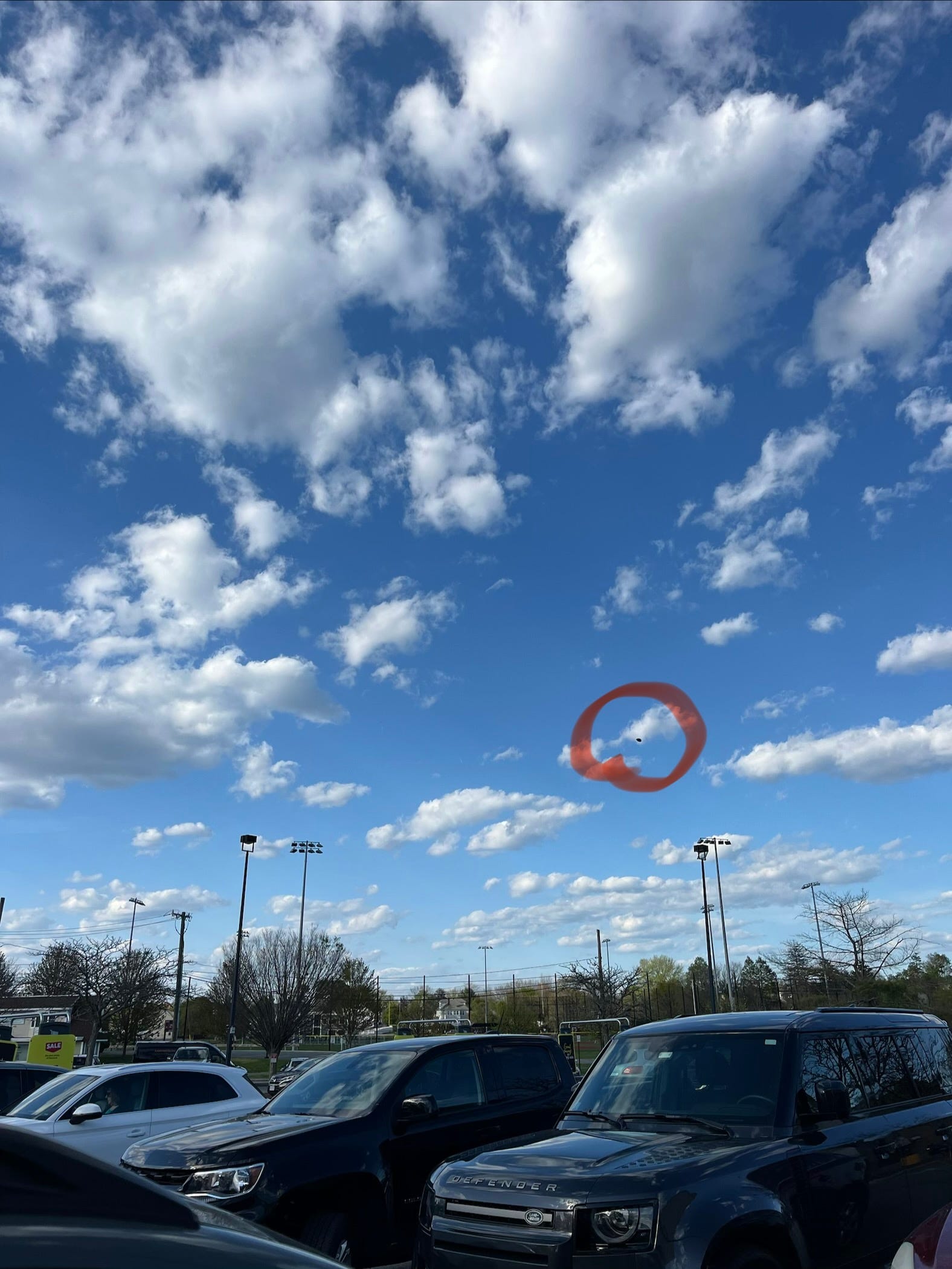
We need to stop giving helium balloons to children. I tried bringing one home to my grandchildren last week when I was visiting them in Boston and the damn thing blew away five seconds after we got into the car. This caused my 4-year-old granddaughter Dot to flip her shit. She sobbed as the balloon floated high into the clouds on its way to the Atlantic Ocean and, probably into the spout of a whale.
Dot cycled through all five stages of grief in the eight minutes it took us to drive home but I’m still rattled by this senseless loss and what role I played in it. “It’s okay, Grammy,” Dot said when I started to sniffle. “That’s what balloons do.”
This was 10 seconds after she yelled at me for having my window rolled down.
“You don’t handle loss well,” my daughter said when we got home and Dot and I both had swollen faces from crying.
Too much untreated trauma, I suppose. Now, that would be story worth writing.
After my brother Danny committed suicide, my family kept it quiet. This was ten years ago and it still haunts me. We said he died from the bottle, which was a major part of it. Your writing and your amazing book show me that I am not alone. And the purpose of my writing is for others to feel a similar sense of belonging, of being seen, felt and heard. Thanks, Meg! I sure hope I get to meet you someday!
I want to write down so many of your sentences to hold them close to my heart. You showed us so many facets of Nancy and Danny and by doing that, you provided a tapestry and a substantial counterweight to the cause of their deaths. Suicide can rob a person of those facets and their humanity, reducing them to an act. It takes bravery storytelling to breathe well deserved color and dimension back into their picture. Thank you for bringing Nancy’s and Danny’s vibrant colors into the picture.